Recap (2015.08.08)

In my spirit:

  • Doing lots of crying over the mystery of salvation this week – as I read to Tirzah Mae from The Jesus Storybook Bible, as I listen to Keith Green’s “Prodigal Son Suite”, as I read Titus 3:4-7

In the living room:

  • This week’s busyness has meant I skipped exercise three days in a row! Oh my! But the important thing is to not let the break keep me from continuing on.
  • I’m reminded of God’s faithfulness, that even on the busiest of days, what needs to get done still manages to get done.
  • Friday night, we watched clips from the Republican primary debate – groan. I’m already ready for this election cycle to be over.

In the kitchen:

  • I continue to enjoy making quick breads with my sourdough starter – this week, it’s banana nut bread using last week’s leftover bananas and another version of lemon zucchini bread (this one with blueberries).
  • I made a roasted garlic white bean/chicken chili from Melissa d’Arabian’s Ten Dollar Dinners for dinner on Sunday, modifying it for the crockpot. I think I’ll make a few adjustments in the future, but it was generally a good recipe.
  • Fajitas are a fun meal and can be a pretty healthy option – especially if you choose corn tortillas (whole grain!), make your own seasoning for the meat (skip the salt!), use lots of peppers and onions (I like to use colored peppers in addition to green), and go light on the cheese and sour cream (Salsa, on the other hand? It’s vegetables!) We enjoyed some chicken fajitas and watermelon on Monday.
  • I made this Kielbasa, Pepper, Onion, and Potato Hash for supper after grocery shopping on Thursday – it was easy as promised, but seemed a little bland. We’ll probably try it again but maybe add some garlic and some cayenne pepper or something similar to add some oomph.
  • I love one-pot dinners and this One-pot Spicy Chicken Riggies is one we’ve enjoyed before. I use whole wheat pasta and serve it with veggies on the side. (You can also make it with half and half instead of heavy whipping cream and skip the butter to lighten it up a bit.)

In the nursery:

  • This week is a week for talking – Tirzah Mae’s been jabbering regularly throughout the day (as opposed to just a couple times a day) and thinks that trying to outvolume someone else while matching pitch is Hi.larious. Like, laugh out loud until you fall over hilarious. And then start again. (She might be her mother’s daughter :-P)

In the craft room:

  • We put together a bulletin board for Sunday School. That counts, right?

In the garden:

  • My tomatoes are ripening! We ate the first batch in BLTs for lunch today.
  • I didn’t check the garden for a day, and when I returned, there were enormous slicing-size cucumbers on my trellis (I grow the pickling sort) – yet they were delicious!

On the land:

  • We heard back from the appraiser – and the appraised value of the house once it’s built will be equal to the amount we’re paying to build it! We were a little worried since we’ll be paying extra to build an unfinished space above the house that can be later finished into a 16×35 foot school room.
  • We spent yesterday dismantling a shed so we’ll be ready to break ground as soon as the loan comes through.

Book Review: I’d Trade My Husband for a Housekeeper by Trisha Ashworth and Amy Nobile

I’d Trade My Husband for a Housekeeper is a full-book expansion on a chapter by the same name in Ashworth and Nobile’s I Was a Really Good Mom before I had Kids. Since I enjoyed the former book and this happened to be the first book in my library’s Dewey Decimal system for 646.78 (a section I started reading with Gottman’s And Baby Makes Three), I figured I’d go ahead and see what this book had to say.

The authors continue their previous pattern of starting each chapter with a tongue-in-cheek quiz before addressing what they consider to be important issues in marriage. They then close out with practical steps women can take to improve their marriages in the given dimension. Call-out boxes sprinkled throughout share women’s “Dirty Little Secrets” or other anecdotes from women related to the given topic.

The title might give the impression that the authors consider marriage expendable – but this is not at all the case. They start (and finish) the book with the view that marriages are worth keeping and that a HAPPY marriage is something worth striving for – both for the sake of each party and for their children’s sake.

What the authors found, as they interviewed women across the country for this book and their previous one, is that many women rated their marital happiness around 5 or 6 on a scale of 1 to 10 – but when they were asked what they were doing to make it better, they were dumbfounded. Those that responded often replied that they figured their marriages would get happier when the kids were in school or out of the house or in some other stage than they were currently in.

Ashworth and Nobile don’t think that’s an acceptable answer – which is why they wrote I’d Trade My Husband for a Housekeeper to offer women suggestions for improving the happiness of their marriages right now.

Several of their main points for improving happiness in marriage overlap with their suggestions for improving happiness as a mother: having realistic expectations, communicating with your husband, prioritizing your relationship. Others are new – adjusting your attitude and investing in having a good sex life with your husband. In general, it’s good sound advice.

This book would be a good choice for those who enjoyed Ashworth and Nobile’s style from I was a Really Good Mom and who want to invest more in their marriage. (If you haven’t read I was a Really Good Mom, maybe you should check out my review.) I think there are probably other books that might give equally good advice – this isn’t unique in its advice, per se. But what makes this book stand out among marriage advice books is its readability and light-hearted tone, a tone which overwhelmed moms are likely to find more appealing than the clinical tone many marriage advice books take.

It’s valuable to note that this book is not Christian advice – which means it’s missing some biggies (Trusting God immediately comes to mind, see 1 Peter 3:5-6). It also means there are vulgar terms littered throughout (mostly in the interviews with other women) – and, as I cautioned with the previous book, many of the quotes from other women display distressingly poor attitudes towards their husbands. While Ashworth and Nobile’s advice is generally good, there is little worth emulating from any of the “real woman” anecdotes (The “I’d trade my husband for a housekeeper” is one of the tamer snippets from those real woman anecdotes.)

For the record, I wouldn’t dream of trading my husband for anyone or anything.


Rating: 3 stars
Category: Marriage Advice
Synopsis: Ashworth and Nobile help women learn to “love your marriage after the baby carriage”.
Recommendation: Generally good advice – and less clinical than many books on marriage, which makes it a lot easier to read when you’re in the trenches of motherhood


Thankful Thursday: A busy schedule

Thankful Thursday banner

I’ve wanted to skip Thankful Thursday all week now. Every time I’ve thought of what I might say over the past week, I’ve fallen into a doldrums. What have I to be thankful about busy, busy, busyness that makes me feel like I’m perpetually playing catch-up at home.

But then, finally, I realized what this busyness represents – people – and, for that, I can be very thankful.

This week I’m thankful…

…for crafting with a friend
It’s been several months since we last spent time together, so spending Saturday morning working on our respective projects while catching up on life was wonderful. I got some pompoms made, she got some quilt blocks sewn. And we visited. Nice.

…for fajitas with an out-of-town friend
He was coming back into town for a wedding and asked Daniel if he’d like to hang out sometime. Daniel thought Monday night, since I’d be gone at a meeting, would be a good time – and invited him to dinner beforehand. We had fajitas before I left for my meeting – and it was nice to hear what he’s been up to since he moved.

…for settling things
Our monday night meeting was for Sunday School, and our classroom team hammered out the teaching schedule and center schedule and all that. I don’t particularly like evening meetings – but it was wonderful to have some resolution about how we’ll be doing Sunday school this year.

…for old friends at Happy Food
Tirzah Mae’s birthday buddy, who was born on Tirzah Mae’s due date, moved away a couple months ago – but her family was back in town for a wedding and came to our Tuesday Night dinner club. The two children tentatively interacted with one another and the two mothers compared notes. And it was tremendous fun.

…for friendly faces at church
None of our team particularly wanted to put up a bulletin board before the Sunday School “Meet the Teacher” event this next Sunday – but I had an idea and I’m at home all day with Tirzah Mae, so I had the time (right?) I volunteered to put up the board. Tirzah Mae and I went out yesterday to assemble things – and Tirzah Mae got held by, well, everyone in the office :-) And, as we went from resource room to resource room, we ran into a friend, setting up her own classroom, along with her three children. She told me that the kids had just been telling her “Remember when we went to Barn’rds and met Rebekah and Tirzah Mae? I’m so glad we did.” Awww. The five-year-old opened the elevator doors for us (Tirzah Mae was in her stroller) and told me that we should come over again – and maybe spend the night :-) I agreed that we’ll plan on spending some time together soon – but that we probably needed to sleep at our own house!

…for friends with skills
A friend of ours, a realtor, is coming to look at the house this evening to give us recommendations for whether/what we should fix/improve before we put it on the market. It’s nice having a friend who we can trust who’ll give us advice (even though it’ll be a while before we’ll actually be putting the house on the market – probably. maybe.)

…for the promise of new friendships
We’ve been trying to get together since our Bradley method childbirth prep reunion in January. But life as a brand-new mom (or, in her case, as a newly-minted mother of two) is busy and we’ve gone back and forth with emails but haven’t set a date. Except now we have one – and Tirzah Mae and I are so looking forward to spending time tomorrow with our new friends.

What have I to be thankful for when life is busy?

I am ashamed for this week’s attitude. All my fussing over feeling rushed at home. The busyness of this week is because we have friends. We have people we love and who love us. And that is something worth thanking God for.

Thank you, Lord, for the many people who make our lives rich and full. Forgive me for valuing my processes over people, for complaining when these gifts interrupt my routine. May I ever rejoice in your good gifts, holding my plans loosely and embracing people tightly.


Book Review: The Lion’s World by Rowan Williams

Why did C.S. Lewis write The Chronicles of Narnia?

Some praise Lewis’s “Christian allegory”, while others rage against the heavy handed allegory – Polly Toynbee of the Guardian writes that “Narnia represents everything that is most hateful about religion” and quotes Philip Pullman saying that Narnia is “one of the most ugly, poisonous things I have ever read.” (Her critical column can be found here).

But C.S. Lewis made it clear that Narnia was not intended allegorically – although he did have a purpose in writing Narnia, a purpose Toynbee quotes as to “make it easier for children to accept Christianity when they met it later in life”.

In The Lion’s World, Rowan Williams expands upon Lewis’s stated purpose, suggesting that “Lewis is trying to recreate for the reader what it is like to encounter and believe in God.” It’s a fascinating suggestion, and one that Williams backs up rather credibly with various arguments.

But The Lion’s World is not a book of arguments. Instead, it is more like sitting down for book club with one of the smartest and most widely read persons of your acquaintance and listening with fascinated interest as he gives his thoughts. And lest you think smartest and most widely read equals most pompous, let me quickly dissuade you of that idea. Williams is humble and approachable as well.

I didn’t take notes as I read, didn’t flag paragraphs, didn’t file things away for comment in my review. I just read, delighting as Williams danced from theme to theme, bringing up things I’d felt but not put together as I read the Chronicles.

Williams does not accept Lewis’s theology unquestioningly, he occasionally notes a tricky theological or cultural comment or a clunky bit of prose. But The Lion’s World doesn’t exist either as an apologetic or as a critic of the Chronicles or of Lewis – it is written as a conversation from one Chronicles enthusiast to another.

It was a pleasure to read. And, at just 144 gift-book-sized pages, it was an easy read too.


Rating: 4 stars
Category: Commentary on the Chronicles of Narnia
Synopsis: Rowan Williams discusses a number of themes he sees throughout the Chronicles of Narnia.
Recommendation: Fans of the Chronicles will likely find this book enjoyable.


There is no land called Narnia

I was shocked, in rereading The Silver Chair for this year’s Chronicles of Narnia Reading Challenge, to realize how much I’d forgotten from this book. It’s never been one of my favorite of the series, but I’ve still read it at least a dozen times. So why had I forgotten so much?

One scene, though, that I could not at all forget, is the scene where the Lady of the Green Kirtle aka the Queen of the Underworld returns to her throne room to find Prince Rillian free from his chair and in his right mind.

She throws some powder on the fire, filling the room with a sickeningly sweet aroma. She begins thrumming a mandolin with a repetitive, mind-numbing thrum. And at last she speaks:

“Narnia?” she said. “Narnia? I have often heard your Lordship utter that name in your ravings. Dear Prince, you are very sick. There is no land called Narnia.”

The Prince, Puddleglum, Eustace, and Jill all try to counter the sweet smell, the repetitive thrumming, the queen’s patronizing derision. There is a Narnia, they say. They’ve been there. But the queen’s questioning makes clear she thinks it all a childish game, a dream. Since they describe Narnia in terms of what she knows, in terms of the Underworld, she presumes that they are only looking at her world and dreaming of something bigger and better.

Eventually, between the mind-fogging effects of the music and the odor and the scorn of the woman, all the travelers begin to relent.

“No, there never was a sun,” said the Prince, and the Marshwiggle, and the children.

In this scene, Lewis has the witch play the role of the Enlightenment scholar, who declares no need for god now that reason is king. Once upon a time, people needed to create myths of gods to explain their world – but now that we have science to explain, we need no God.

And here Lewis makes one of his most compelling arguments for the existence of God: joy. And the seemingly joyless Marshwiggle is the one to make it.

“One word, Ma’am,” he said… “One word. All you’ve been saying is quite right, I shouldn’t wonder….So I won’t deny any of what you said. But there’s one thing to be said, even so. Suppose we have only dreamed, or made up, all those things – trees and grass and sun and moon and stars and Aslan himself. Suppose we have. Then all I can say is that, in that case, the made-up things seem a good deal more important than the real ones….And that’s a funny thing, when you come to think of it. We’re just babies making up a game, if you’re right. But four babies playing a game can make a play-world which licks your real world hollow. That’s why I’m going to stand by the play-world. I’m on Aslan’s side even if there isn’t any Aslan to lead it. I’m going to live as like a Narnian as I can even if there isn’t any Narnia.”

You see, science might be able to explain a lot about how this world works – but it doesn’t explain the unfulfilled longing for joy that rests in each human heart. It doesn’t explain the hunger that every experience in this world serves only to deepen. A purely naturalistic world would ultimately have us all as nihilists – since we are mere pawns of impersonal natural forces.

One must say that, if religion is a story, it is a much better story than the one naturalism tells. And if there is no heaven, at least the tale of heaven goes further to quench our forever longing than does the naturalistic story of death.

If this be a game, it’s a play-world which licks your real world hollow.

As C.S. Lewis said in prose:

“If I find in myself a desire which no experience in this world can satisfy, the most probable explanation is that I was made for another world.”

~C.S. Lewis, Mere Christianity

So even if there is no Narnia, I shall live like a Narnian.

I choose joy.


Down from the mountain

When I was in high school, our youth group talked about “mountaintop experiences”.

Mountaintop experiences were when we had some sort of emotional experience with God or His word, usually at a camp or other special event. We would get all hyped up about one thing or another – evangelism, personal holiness, being in the word, whatever.

I don’t remember if we had any direct teaching on the Biblical basis for the term, but it hearkened to Moses on the mountaintop receiving revelation from the Lord or to Peter and James and John seeing Christ transfigured on the mountain. Away from people on the mountaintop, each of these had very special encounters with God.

And each of these ran into difficulties when they returned from the mountaintop to face everday life. Moses found the camp worshipping a golden calf. The disciples came down to discover their compatriots unable to cast out a demon.

We were given warnings about life off the mountaintop. We were warned that we’d come home from camp only to be tempted to get into a fight with our parents. And, amazingly enough, the warnings were usually right. It was a lot harder to be obedient, to be in the Word, to tell others about Christ once we were back in everyday life, once we had to clean our rooms and do our homework and get along with our siblings.

I was struck, as I re-read The Silver Chair last month for the Chronicles of Narnia Reading Challenge, that Lewis describes a mountaintop experience as well – and describes the difficulty of coming down from the mountain.

Jill meets Aslan on a vast plateau that sits high, high, high above the land of Narnia. She receives a task from Aslan: to find the lost prince of Narnia. And she receives four signs by which to complete the task.

Before Aslan blows Jill off the mountaintop to meet Eustace, he gives her a last warning – a warning about life off the mountaintop.

“Stand still. In a moment I will blow. But, first, remember, remember, remember the signs. Say them to yourself when you wake in the morning and when you lie down at night, and when you wake in the middle of the night. And whatever strange things may happen to you, let nothing turn your mind from following the signs. And secondly, I give you a warning. Here on the mountain I have spoken to you clearly: I will not often do so in Narnia. Here on the mountain, the air is clear and your mind is clear; as you drop down into Narnia, the air will thicken. Take great care that it does not confuse your mind. And the signs which you have learned here will not look at all as you expect them to look, when you meet them there. That is why it is so important to know them by heart and pay no attention to appearances. Remember the signs and believe the signs. Nothing else matters. And now, daughter of Eve, farewell — “

Aslan gives two instructions on leaving the mountaintop, but they are really one.

“Remember, remember, remember,” Aslan said. Lewis has Aslan almost quote the words following the Hebrew shema in Deuteronomy 6:

“And these words that I command you today shall be on your heart. You shall teach them diligently to your children, and shall talk of them when you sit in your house, and when you walk by the way, and when you lie down, and when you rise. You shall bind them as a sign on your hand, and they shall be as frontlets between your eyes. You shall write them on the doorposts of your house and on your gates.”

~Deuteronomy 6:6-9 (ESV)

Aslan was telling Jill that she needed to remember what he had spoken. She needed to repeat his words to herself multiple times a day. She needed to return to his word again and again and again.

“Let nothing turn your mind”, Aslan said. He was telling Jill that she needed to purpose to be obedient to Aslan’s word. What’s more, she needed to keep on purposing to do Aslan’s word, whatever the inducements otherwise.

“Take great care that it does not confuse your mind,” Aslan said. He was telling Jill that she needed to guard against distraction. I am reminded first of Titus 3:9 (I’m in Titus now, so that’s on my mind quite a bit), where Paul warns the Cretans: “But avoid foolish controversies, genealogies, dissensions, and quarrels about the law, for they are unprofitable and worthless.” When Jill told bits of their quest to the lady of the green kirtle, she laughed them off with what seemed like enlightened words, dismissing Aslan’s words as myths. Eventually, under the power of the lady’s smoke, she would make Jill and her companions doubt that life above the ground even exists. Confusion was everywhere – but Jill needed to guard against distractions from her purpose – and from what Aslan had said.

“Pay no attention to appearances,” Aslan said. He was telling Jill that she needed to value Aslan’s word above her interpretation. How easy would it have been for Jill to have paraphrased the third sign “You shall find a writing on a stone in that ruined city, and you must do what the writing tells you” as “Follow the directions on the stone sign”? Very easy, I think. And when she saw the words “Under me” inscribed on the stone? She would have been looking for a stone sign, not writing carved on the stone underfoot. She could have missed (and nearly did miss) what Aslan had directed if she’d allowed herself to fixate on her interpretation of the sign rather than the sign itself. The Pharisees of Jesus’ day did exactly that, fixating on what they thought the Messiah was supposed to be and missing the Messiah when He came. “You search the Scriptures because you think that in them you have eternal life; and it is they that bear witness about me, yet you refuse to come to me that you may have life.” (John 5:39-40 ESV)

Lewis’s advice, given by the mouth of Aslan, is good advice, I think, for those of us who live on this side of divine revelation. We have the signs, they are written in the Scriptures. But as we live our busy lives, if we are to live out the purposes for which God has called us, we must:

  • Remember what God has spoken
  • Purpose to be obedient to what God has spoken
  • Guard against distractions
  • Value God’s word above our interpretations

If we do these four things, I think we will avoid many of the traps that lie in store for us in this world down from the mountain.


Recap (2015.08.01)

In my spirit:

  • Contemplating how God’s grace “[trains] us to renounce ungodliness and worldly passions, and to live self-controlled, upright, and godly lives in the present age.” (Titus 2:12)
  • Gearing up to teach preschool Sunday School this year – and praying God grants grace and wisdom to teach Christ, not mere morality.

In the living room:

  • I read a novel this week – and have decided that novels ruin me for everyday life. I start chafing at my chores, wishing I could just be sitting devouring another book. And, this would be why nonfiction is what I read at this point in my life.
  • The library needs to stop having booksales. My bookshelves are already all full to overflowing and I can’t resist low-cost books – so I always end up coming home with a stack I have no idea where to house.

In the kitchen:

  • Slow cooker meals are certainly preferable to oven meals in the summertime – and we love this Slow Cooker Orange Chicken. I make it healthier by adding 8 oz snow peas (stemmed and cut in half), 1 can pineapple tidbits (drained), 1 green pepper (cut into 1/2 to 1 inch chunks), and 1 red pepper (also cut into chunks) about 30 minutes to an hour before serving.
  • I tried making some veggie and cheese enchiladas with black beans, zucchini, colored bell peppers, onions, and mushrooms. I thought it was delicious – Daniel thought it could use some meat :-)
  • I’m adding lots of veggies to dishes – including adding chickpeas, spinach, and acorn squash to this Chicken Peanut Curry. It was a winner in my book.
  • This Glazed Lemon Zucchini Bread looked good – so I made a sourdough version, reducing the sugar and oil by half and skipping the glaze. It was good, but not great – it felt like it had too little lemon and too little zucchini. I’m sure the glaze would have added some lemon flavor, but the small amount of zucchini felt too bad. I think I’ll try modifying a different recipe that includes more zucchini to get the same lemon/zucchini combo.

In the nursery:

  • I put Tirzah Mae in her crib Sunday evening and she crawled over to the bars and pulled herself up as if she’d been doing it all her life – so her mattress got lowered right then and there (Thank you, beloved!)
  • After what seems like months of what I was sure was teething, Tirzah Mae has finally gotten her first tooth – but she’s teasing other parts of her gums, making me think there are others not far behind.

In the craft room:

  • I finally got around to making pom-poms today when a friend came over to visit and craft – this method didn’t end up working out for me, but we found another that works reasonable well.

In the library:
aka “Books added to TBR list”

In the garden:

  • I got two green beans this week. Two. From 18 plants.
  • But the broccoli is still going strong, my cucumbers are giving me a steady trickle, and the peppers are setting on some more fruit. Also, the tomatoes, once they ripen, will be abundant

On the land:

  • Still waiting on the construction loan
  • The septic guy came out to dig some test holes to determine percolation rates (basically, to confirm that our soil doesn’t absorb water so we’ll need the advanced system we’re getting.)

On the web:


No other stream

Who from among the lovers of Narnia has not quoted Mr. Beaver’s famous words: “Safe? … Who said anything about safe? ‘Course he isn’t safe. But he’s good.”

I certainly have, many a time.

Beaver was, of course, responding to Susan’s initial fear upon hearing that Aslan was a lion, not a man. When she had thought Aslan was a man, she had experienced that strange feeling – “like the first signs of spring, like good news”. But now that she knew she would be meeting a lion, she felt apprehensive. When the time came that she would actually meet Aslan, she felt apprehensive as well, begging Peter to go greet Aslan – Peter was the eldest after all.

Jill Pole’s initial experiences with Aslan were completely different. Her classmate had just fallen down an enormously high cliff and while Jill was prostate on the cliff in terror, an animal had rushed over and was breathing right beside her, so close she could feel his chest vibrating. She couldn’t move at first, but once she could, she saw that it was a lion. At that very moment, the lion stalked away.

Jill became thirsty, and when she did, she rose from her place on the ground and began to search for water, moving cautiously for fear of the lion. She safely tiptoes her way through the trees and at last finds her heart’s desire. Water. At this point, the thing she wants most in all the world. The thing she feels sure she will die without.

But the lion.

The lion was lying right there, between her and the stream.

She stopped short in terror. She could not advance towards the stream. The lion might kill her. She could not run away. The lion might kill her. She was desperate.

This was no lovely thrill of spring or good news. This was only terror.

And then the lion spoke. He offered her drink.

She asked him to move. He refused. She tried to negotiate for her safety. He refused. She tried to reassure herself that he wasn’t as dangerous as she felt he was. The lion would have none of it:

Do you eat girls?” she said.
“I have swallowed up girls and boys, women and men, kings and emperors, cities and realms.”

He couldn’t get any more unsafe.

Jill decides to forgo the stream. The lion reminds her that she will die without it. She tries to find another way, another stream – one that she would not have to go through the lion to get.

“Oh dear!” said Jill, coming another step nearer. “I suppose I must go and look for another stream then.”

“There is no other stream,” said the Lion.

And such is the crux of Jill’s dilemma.

There was no other stream. And this stream was accessible only through Aslan.

Aslan the great and terrible – the swallower of children, of adults, of kingdoms.

The only way she could live was to throw herself at His mercy.

And so she did, with no reassurances of His goodness.

Her situation was completely different than Susan’s – she had no assurances that this unsafe god was good. She would learn that, but she didn’t know it now.

For now, her only reality was that

“There is no other stream.”


I’ve been reading The Silver Chair as part of Carrie’s Chronicles of Narnia Reading Challenge. Don’t forget to check in there to see what others have been reading this month.


Read Aloud Thursday (July 2015)

For the most part, Tirzah Mae and I have been reading board books by the same authors as we read last month – because, of course, her mother intends to read every book at our local library and working systematically from where we started seems the best route to take :-)

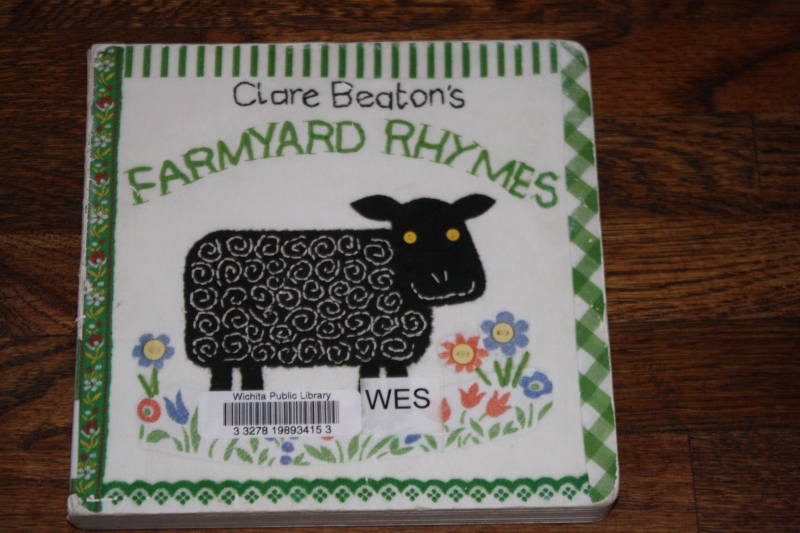
Clare Beaton’s Farmyard Rhymes
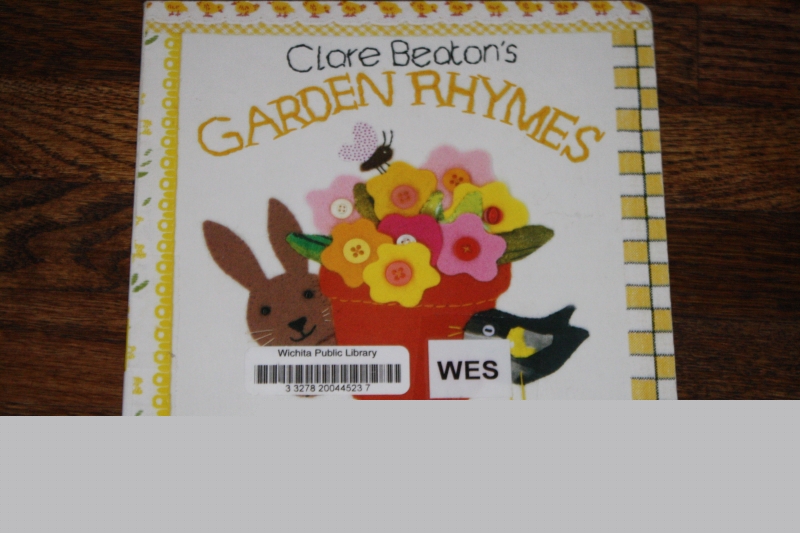
and Clare Beaton’s Garden Rhymes

Clare Beaton's Farmyard RhymesClare Beaton's Garden Rhymes

These are just like Clare Beaton’s Nursery Rhymes (which we read last month.) They have the same type of lovely embroidered and appliqued artwork accompanying familiar and unfamiliar rhymes. I would love to own copies of Clare Beaton’s books – Tirzah Mae likes the rhymes and I love the artwork.

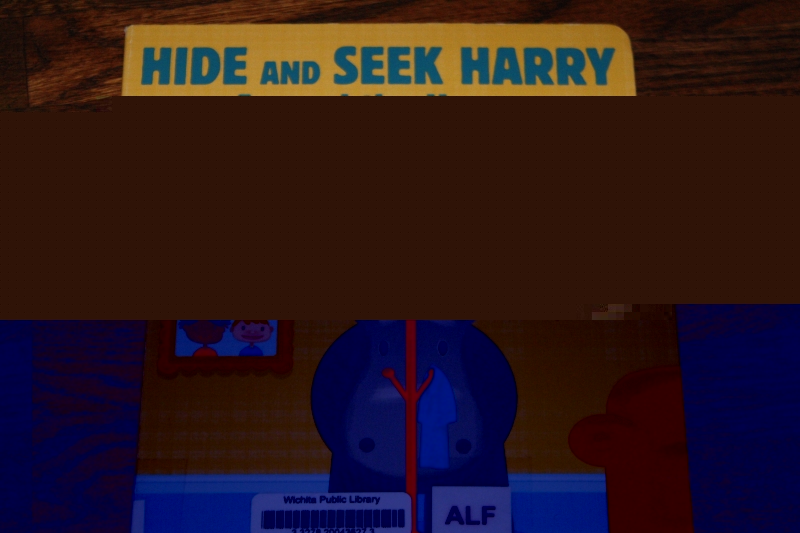
Hide and Seek Harry Around the House by Kenny Harrison

Hide and Seek Harry around the House

I believe this is the first of the Hide and Seek Harry books – we read Hide and Seek Harry at the Beach last month. Just like last month, we found plenty of things to point out as Harry the Hippo “hid” in each of the rooms of a house.

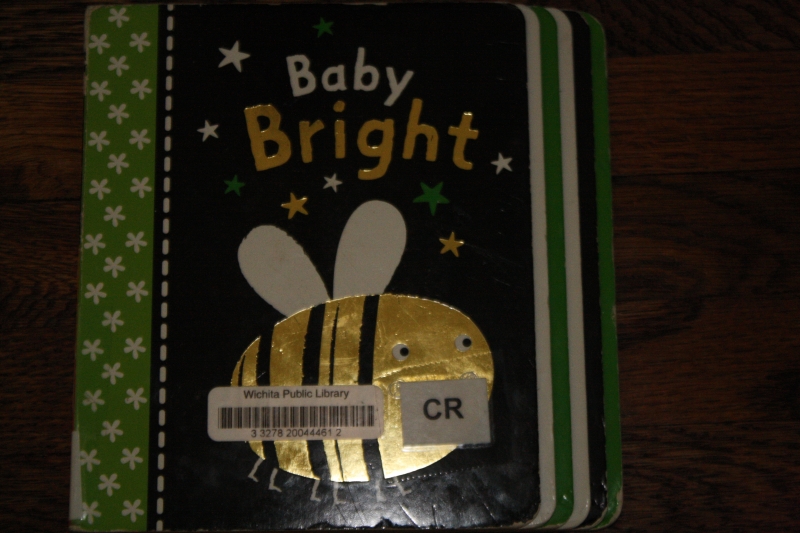
Baby Bright

Baby Bright

I found Baby Shine asinine last month, but I wouldn’t skip reading a book my library owns for such a small beef – so I requested Baby Bright to finish out the series. Baby Bright is green and yellow (Baby Shine had blue instead of yellow), black and white, but with gold leaf instead of Shine’s silver leaf. Tirzah Mae enjoyed the shimmering (again), and her mother found this title slightly less annoying – since at least every two page spread has a theme of sorts (mouse/cheese and owl/moon). Still. Ugh.

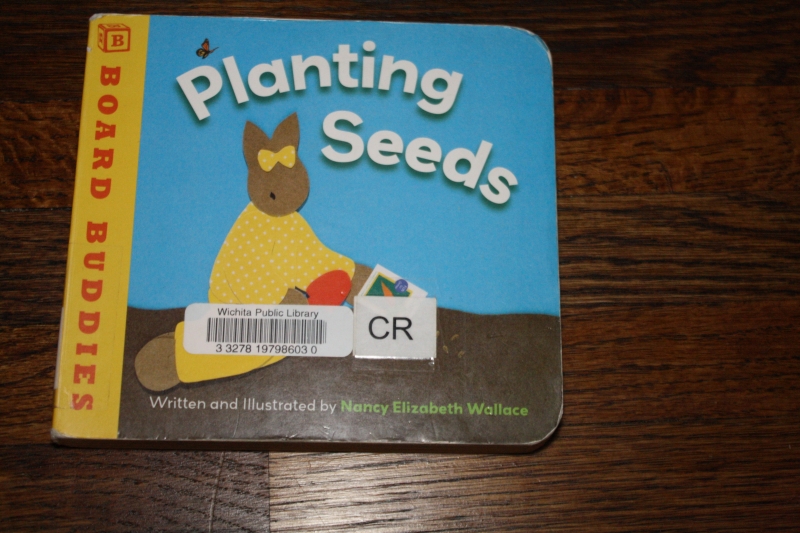
Planting Seeds by Nancy Elizabeth Wallace

Planting Seeds

A simple counting book in which a family of brown bunnies take a garden from digging to eating. The illustrations are in cut paper and there are generally at least two different objects to count the appropriate number of (six bunnies, but also six visors and six dragonflies). I can see this one being quite a bit of fun once Tirzah Mae is ready to start learning to count – and once she understands what we’re doing when we’re gardening. For now? She isn’t tremendously impressed.

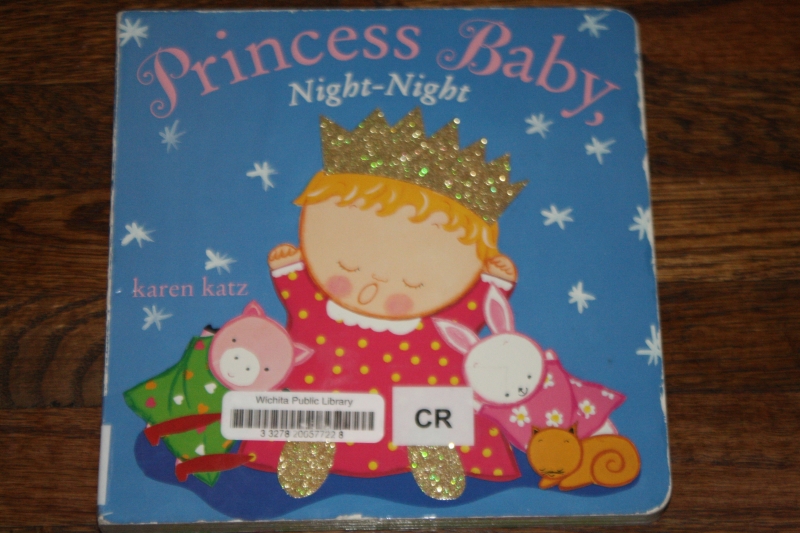
Princess Baby, Night-Night by Karen Katz

Princess Baby, Night-Night

This book takes the prize for most annoying book read this month. A parent asks “Princess Baby” if she’s completed each step of her bedtime routine (always starting with “Princess Baby, did you…” The little girl replies that she has and the illustrations show her doing each step with her stuffed animals and dolls. Finally, the little girl falls asleep among her toys and her parents put her into her bed. Of course, she does all of this while wearing a glittery golden crown.

Where do I start? Can you think of any more annoying moniker than “Princess Baby”? I’m personally not a fan of calling little girls princesses. Yes, all little girls dream of being princesses, and it’s fine for parents to let them play that – but better that they know that isn’t who they actually are. Teach them that they’re valuable as who they are, right now. Anyway, I don’t like the “princess” thing. And that’s probably the bulk of why I don’t like this book. Yep. Just prejudice against princessing. You may think otherwise.

Where is Baby’s Belly Button?
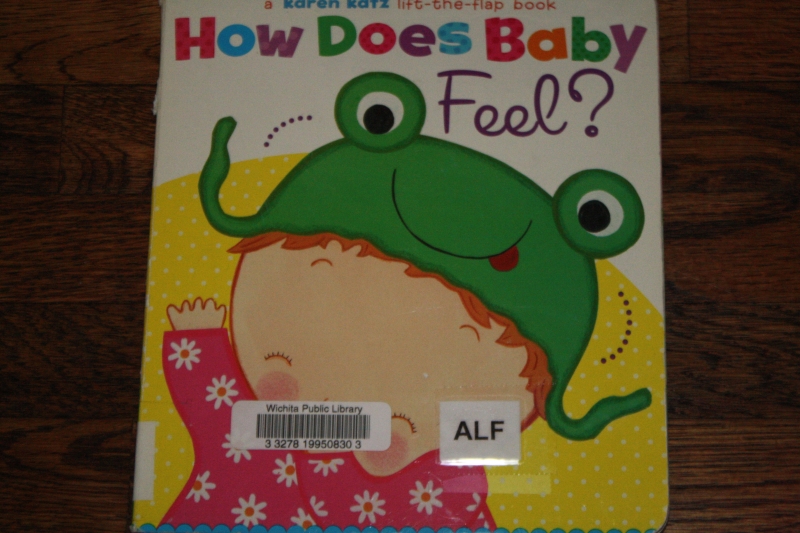
and How Does Baby Feel? by Karen Katz

Where is BabyHow Does Baby Feel?

In Where is Baby’s Belly Button?, each double page spread asks where a certain body part of baby’s is – and then the reader lifts a flap to reveal that body part along with a few more words. So “Where is baby’s mouth?” has a fold down sippy cup with the words “Behind the cup!” on the opposite side of the flap. Tirzah Mae loved the repetition of this book, especially since she’s familiar with the cadence of mama’s voice playing peekaboo. I enjoyed reading it to her, but didn’t exactly enjoy trying to keep her from ripping the flimsy cardstock weight flaps.

How Does Baby Feel? describes a picture on one page (“Baby is yawning”) and asks “How does baby feel?” When the reader lifts a flap, she reveals that baby feels… “Sleepy.” I had the same complaints about flimsy cardstock with this one – and it had less cadence and familiarity, so Tirzah Mae didn’t enjoy it as much as Where is Baby’s Belly Button?

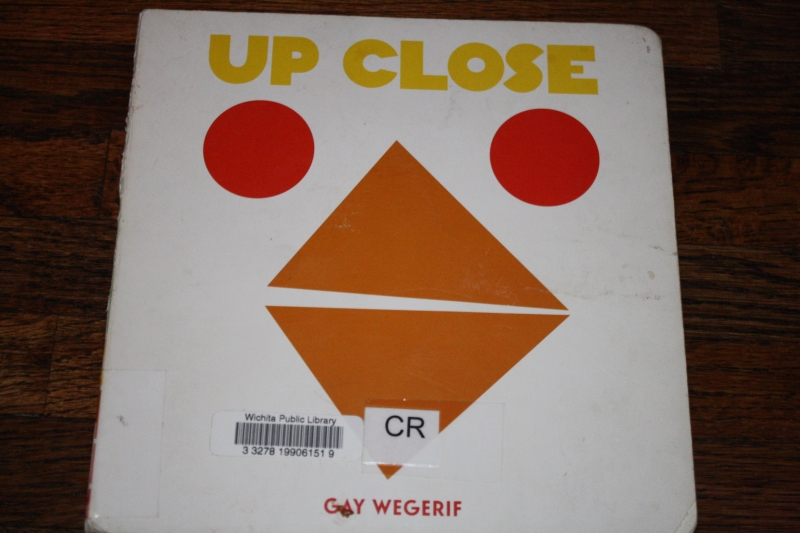
Up Close by Gay Wegerif

Up Close

A bigger than usual board book, this one has a format similar to that above except that instead of lifting flaps, one turns the page. The first two page spread states “Up Close, I see your [body feature]. You are a…” and the second declares what the animal is, accompanied by a zoomed out graphic of that animal. Problem is, the simple geometric shapes making up both the “up close” and the zoomed out images are so simplified as to be unrecognizable (most of the time.) This is an artsy book, but not one that’s particularly worthwhile for kids (in my opinion.) Tirzah Mae liked the shapes and colors though.

Black on White and
White on Black by Tana Hoban

White on Black/Black on White

Also in the artsy realm, these two wordless books contain black and white outlines of familiar and unfamiliar objects. A bib. A leaf. A bucket. A sailboat. A necklace. A bird. They’re visually interesting but don’t have a whole lot to talk about.

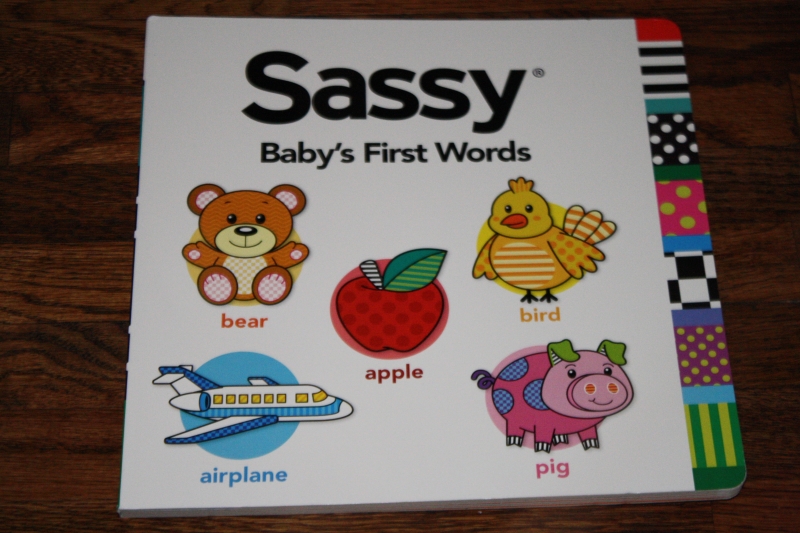
Baby’s First Words by Sassy

Sassy: Baby's First Words
We got this book thanks to Dolly Parton’s Imagination Library and enjoyed talking about all the things we saw inside. A farmyard complete with animals and tractors and barns and haystacks. A highway running along a canal with a train track nearby and planes flying above. A picnic with a variety of food items. This was a hit with both Tirzah Mae and her mother.

Check out what other families are reading aloud at Read Aloud Thursday at Hope is the Word.


Not as bad as I make it look

Do I make parenthood look bad?

It’s the question I asked myself as Daniel drove us home from our twice-monthly dinner club.

We’re the first couple among the group who’ve had children while continuing to regularly attend – and when people ask me how I am, I’m likely to respond that I’m tired, Tirzah Mae’s not been sleeping, it’s got to be teething, or (my favorite line) “I signed up for this – and it’s only another twenty years or so.”

But is that the sum of how I feel about parenthood? How I feel about myself as a stay-at-home helpmeet or about Tirzah Mae as my 24/7 companion?

No. It’s not.

Parenthood is hard, make no mistakes about it. But it is also rewarding, fun even.

But the “Happy Food” friends ask me when I’m hungry because it’s an hour after my normal eating hour, when I’m exhausted because I’m at the end of the day (and quite possibly after my usual bedtime.) So I respond with a litany of complaints.

I remarked on this to Daniel and he responded that I was being honest. That I have found parenthood hard.

And it’s true. Parenthood has been hard. But I realized that even Daniel doesn’t see the fun I have.

By the time Daniel gets home from work, I’m hungry (it’s almost dinner time!) and I’m tired (it’s been a long day of work and play.) Tirzah Mae gets clingy right around the same time I’m trying to get dinner prepared, so I’m often feeling stressed about juggling cooking and a clingy child. So Daniel hears my frustrations, my exhaustion, my readiness for a break.

When Tirzah Mae and I go out in the morning and I talk with other moms, I’m more than likely stressed about having had to get out of the door by a specific time and I’m working to keep Tirzah Mae’s normal morning energy under control so she’s not disrupting whatever we’re doing. So I’m likely to be happier than at night, but still frustrated.

What no one else sees is what happens in the mornings and early afternoons, while Tirzah Mae and I are both well rested and well fed. We roll around on the floor laughing. We dance around the living room. We make faces at one another. We cuddle. We go out on the front porch and watch the rain streaming down, occasionally sticking our hands in the overflow from the gutters. We talk through the ordinary events of our day – making oatmeal, changing diapers, making the bed, putting on makeup or brushing my hair, cleaning the toilet, watering the garden, washing dishes, emptying the dehumidifier, folding laundry or hanging it to dry,

I’m sorry for how I represent parenthood. It’s not as bad as I make it look.