Dogmatic or emergent?

Notes on Kevin DeYoung and Ted Kluck’s
Why we Love the Church:
in praise of institutions and organized religion

Chapter 6 : Brief Interviews (Snapshots of Churched People)

“Sadly, there seems to be a ‘you’re either young, Reformed, and dogmatic or you’re emergent’ dichotomy forming, and it’s troubling.”
-Ted Kluck, Why We Love the Church, page 144

Young? Check Yes
Reformed? CheckLeaning that way
Dogmatic? CheckYou tell me.

The question is, do I gravitate towards this “side” of the dichotomy because I’ve thought it out and concluded that this side has it right–or am I simply reacting to what I see as the anti-intellectualism and political liberalism of the emergent side?

O, that I would base my opinions and actions on Christ and what He has said rather than on belonging to a certain “camp” of beliefs.


Recap (March 14-20)

On bekahcubed

Book Reviews:

Photo Albums:

Recipes:

On the web

Books for the TBR list:

  • Eye Contact by Cammie McGovern
    I’m honestly not sure if I’m brave enough to read this thriller about a young autistic boy who witnesses the murder of his friend. But I *want* to be brave enough to read it.
  • The Journey to Truth by George F. Garlick
    Big Bang, superstring theory, higher dimensions, and God. I want to read this but I’m afraid it might be over my head. I love science and how it testifies to God’s nature–but I hail from the softer sciences and wonder how much I’ll understand of this.
  • The Whistling Season by Ivan Doig
    A housekeeper who can’t cook, a teacher who runs off with a revival preacher, and three boys in all sorts of trouble? Sounds fun–and intriguing. It was written by a guy?

News to take note of:

Thought-provoking posts:

Videos worth seeing:

  • Not being from the South, I can’t say I understand the obsession with Chick-Fill-A. But I am highly in favor of Tim Hawkins–and his latest Chick-Fill-A song is pretty funny.

    HT: Jolanthe

New Testament Traditions

Notes on Kevin DeYoung and Ted Kluck’s
Why we Love the Church:
in praise of institutions and organized religion

Chapter 5 : The Historical (One Holy Catholic Church)

For the first two parts of my notes on Chapter 5, check out Traditional or Restorationist? and How Church Oughta Be

Question 3: What is the role of tradition in the church?

I hail from a contemporary congregation in which tradition is viewed with deep suspicion. No word is perceived as more dangerous than “ritual” or “routine”. Far from doing things “the way we’ve always done them”, we like to do things differently–all the time. The only thing constant is change, right?

**Please recognize that the attitude does not always equal reality. We have plenty of unwitting routines and rituals–the progression of a typical worship service, the way the elders greet the congregation or give announcements, the warning not to take communion as “routine”. But these routines are the result of habit rather than willful decision to adopt or retain a certain action or order as beneficial.**

If asked to defend this wariness towards tradition, a few congregants might be able to produce a few New Testament proof texts: Colossians 1:8 “Beware lest anyone cheat you…according to the tradition of men…”, I Peter 1:18 “knowing that you were not redeemed with corruptible things, like silver or gold, from your aimless conduct received by tradition from your fathers”, or Matthew 15:1-9 and Mark 7:1-13 in which Jesus sharply rebukes the Pharisees and scribes for “making the Word of God to no effect through your tradition which you have handed down.” (Mark 7:13)

Some might take from these passages that tradition has no place in the New Testament church–that we have been saved from tradition and that tradition is necessarily in opposition to the Word of God.

Scripture, I believe, says otherwise.

In I Corinthians 11:2, Paul praises the brethren that they “keep the traditions just as I delivered them to you”, implying that tradition was important, even in the earliest New Testament churches. Likewise, in 2 Thessalonians 2:15, the brethren are exhorted to “hold the traditions which you were taught, whether by word or our epistle.” On multiple occasions, Paul encourages the church to follow his pattern, or to be a pattern to others (Phil 3:17, I Tim 4:12, II Tim 1:13, Tit 2:7). Clearly, tradition is not seen as unequivocally negative.

What, then, is the proper role of tradition in the New Testament church? How is one to determine whether tradition is appropriate or inappropriate? I believe Scripture gives us some guidelines for understanding the proper role of tradition in the church of God.

Tradition is not commandment

Quoting Isaiah 29:13, Jesus says in Matthew 15:9 of the Pharisee’s and scribes’ traditions: “And in vain they worship Me, teaching as doctrines the commandments of men.” Tradition is not the commandment of God. This should be made perfectly clear. Nowhere are we commanded in Scripture to follow a certain liturgy or church calendar. Nowhere are we commanded to worship in a specific location or using certain words. To place these traditions on the same level as the Word of God is foolish and unBiblical.

God’s commandment is given precedent over tradition

In Matthew 15:1-9 and Mark 7:1-13, Jesus rebukes the scribes and Pharisees, not for keeping traditions but for “transgress[ing] the commandment of God because of [their] tradition.” They were attempting to nullify the commands of God regarding honoring parents by religiously stating that people could give the money that would have supported their parents in their old age to the temple instead. “Sorry, Mom and Dad, I already gave it to the temple–you wouldn’t be so selfish as to take from the temple?” Jesus makes clear that God’s commandment is given precedent over tradition–and that any tradition that would nullify God’s word is to be discarded.

Tradition is not gospel

Paul speaks to this in Colossians 2, where he warns the Colossians against those who would forget Christ and cling instead to the commandments of men: circumcision, food, festivals, and angel worship. Paul says that these things have the appearance of wisdom—but that they are of no value against the indulgence of the flesh (Col 2:23). All that is necessary for salvation is complete in Christ. “For in Him dwells all the fullness of the Godhead bodily; and you are complete in Him, who is the head of all principality and power.” (Col 2:9-10) Tradition is neither necessary nor efficacious for salvation.

We were saved from aimless tradition.

I Peter 1:18-19 states that “you were not redeemed with corruptible things, like silver or gold, from your aimless conduct received by tradition from your fathers, but with the precious blood of Christ, as of a lamb without blemish and without spot.” Before we believed, all our conduct was aimless, attempting to achieve salvation through our own works, whether by tradition or otherwise. We have been saved, redeemed by the blood of Christ, from the aimless groping for salvation passed down to us by man’s traditions.

Traditions are good.

Recognizing that tradition is not commandment, tradition cannot be used to nullify commandment, tradition is not gospel, and that we have been saved from aimless tradition, Scripture affirms that tradition is nevertheless good. I Corinthians 11:2, in which the Corinthians are praised for keeping the traditions as Paul delivered them, is preceded by the words: “Imitate me, just as I also imitate Christ.” Paul places himself as an example, setting up a tradition, if you will, of imitation. The Colossians 2 passage, which warns against empty tradition that seeks salvation through works, is preceded by exhortation to follow a better tradition “As you therefore have received Christ Jesus the Lord, so walk in Him, rooted and built up in Him and established in the faith, as you have been taught, abounding in it with thanksgiving.” (Col 2:6-7)

In 2 Thessalonians, the believers are actually urged to withdraw from any brother who does not follow a specific tradition passed down from Paul: “But we command you, brethren…that you withdraw from every brother who walks disorderly and not according to the tradition which he received from us.” (II Thes 3:6) This tradition Paul speaks of is that of tireless good works, quietness, and self-sufficiency (that is, not mooching off of the believers, but working for their own bread).

I love the way DeYoung speaks of tradition:

“Although there’s much talk these days about our lack of Christian community and the need we have to do our exegesis in the community of faith, the one community we seldom look to for wisdom is the community of the dead.”

The traditions of the church are neither gospel nor command, but they are an opportunity by which modern (or post-modern) believers may follow the example of and learn from the generations of Christians who have gone on before us, and they are an opportunity to join in worship with believers throughout the ages, all proclaiming the great works of God in salvation.


How church oughta be

Notes on Kevin DeYoung and Ted Kluck’s
Why we Love the Church:
in praise of institutions and organized religion

Chapter 5 : The Historical (One Holy Catholic Church)

For the first half of my notes on Chapter 5, check out Traditional or Restorationist?

Question 2: How should church services be conducted?

DeYoung criticizes Viola (author of Pagan Christianity) sharply for what he sees as Viola’s absolute rejection of the traditional order of worship. According to DeYoung, Viola claims that the order of service is unscriptural and pagan, and that it “strangles the headship of Jesus Christ.” Instead, Viola encourages a return to the “glorious, free-flowing, open-participatory, every-member-functioning church meetings that we see in I Corinthians 14:26 and Hebrews 10:24-25.” (Having not read Pagan Christianity, I base my understanding of Viola’s position on what I have read in Why we love the church, which may or may not be a correct representation of Viola’s position. Caveat emptor.)

What Viola, apparently, argues for is a restoration of a 1 Corinthians 14 “order of worship” in which “whenever you come together, each of you has a psalm, has a teaching, has a tongue, has a revelation, has an interpretation” (I Cor 14:26). Each person shares their part and, as Viola mentions, there is a “glorious, free-flowing, open-participatory, every-member-functioning church meeting.”

But does I Corinthians 14 really describe this free-form manner of conducting church meetings as being ideal? Certainly, I Corinthians 14:26 makes clear that this is how church meetings in Corinth were being conducted. But Paul’s commentary on this form of worship indicates that “free-form” was not at all the ideal.

The context of I Corinthians 14, far from encouraging a “free-flowing, open-participatory, every-member-functioning church meeting”, instead encourages order and silence in church meetings. Paul lays out standards for how many people are to speak (two or at most three), for how they are to speak (in turn, with interpretation for tongues), and for who is not to speak (women). Rather than encouraging the Corinthian’s free-flowing style, Paul places limits on their meetings and insists on decency and order in their services.

Is this to say that a free-flowing, participatory service is Scripturally inappropriate? By no means. As long as the prescriptions of I Corinthians 14 for decency and order are carried out, this appears to be an appropriate form for a worship service to take–although logistically, this form is generally confined to a smaller body of believers. I understand that this is how the Plymouth Brethren conduct their breaking of bread services and my mom has told me that my uncle and his wife belonged to a fellowship (part of the Charismatic restorationist movement of the 70s) that conducted its services in this way. These services can be beautiful–but they also require great discipline and obedience on the part of the church body in order to ensure that all things are indeed done decently and in order.

So this open-participation form of worship appears to be Biblically permissible, when conducted according to Paul’s standards in I Corinthians–but is this open-participation form of worship ideal or required? Does Scripture say anything about what specific form church gatherings are to take?

The New Testament has little to say on this topic. Acts 2:42 indicates certain important components of church life: doctrine, fellowship, breaking of bread, and prayers. I Corinthians 11 indicates the importance of communion in early church life–and the necessity that it be taken in an appropriate way. But as far as an order of service? I see none.

However, the Old Testament is filled with liturgy. After delivering the people of Israel from Egypt, God set up a specific calendar for worship and celebrations. He prescribed a certain way in which worship in the tabernacle was to take place. In Numbers 6:22-27, God gives the priests a specific benediction by which they are to bless the people of Israel. We see examples of liturgical-type worship taking place in heaven such as when the living creatures give glory to God and then the twenty-four elders bow down and worship in chorus in Revelation 4. Historical documents from the early church (AD 95-200) include orders of worship and liturgy.

So, while the New Testament does not prescribe a specific order of worship, I see no evidence to suggest that liturgy or set orders of worship are opposed to Scripture or to the example of the early church. I see no evidence to suggest that liturgy is a Pagan component that has been mixed into Christian worship. Rather, I see liturgy as a continuation of the liturgical tradition of Judaism and of the early church. Scripture does not insist upon liturgy for a New Testament church–but neither does it forbid it.

What Scripture does say clearly about the order of service is that there BE order in the service.

Scripture gives great latitude with how church meetings are supposed to be carried out: where meetings occur and what order the service takes. But Scripture is clear in the need for order in the meeting of the church–an element I fear is neglected in this newest form of Restorationism.


Thankful Thursday: Sister Time

Thankful Thursday banner

Today, I’m thankful…

  • for the delicious (if somewhat monochromatic meal) I got to enjoy with my big sister Tuesday night.

    Anna provided the wine (James Arthur Vineyard’s San Realto–one of my all time favorites) and the roast beef. I provided the jello and made my Honey-Glazed Root Vegetables. Both of us still had water in our water bottles so we chose to just drink out of them instead of dirtying more dishes. Aren’t we just the most practical things?
  • for a chance to sleep in yesterday and then veg about with my sister.
  • that Anna has found a church that is encouraging her in her walk.
  • that I got to meet all of Anna’s Bible study gals at Bible study last night (and that they took it okay when I started bawling in the middle of study–so sorry, Anna, so sorry. I didn’t intend to.)
  • that I had another chance to sleep in today at my sister’s house.
  • that I’m home again–but that my sister is coming down for the weekend so we can have hard-core family time this weekend (On the agenda? Wedding invitation addressing, quilt-making, birthday dinner having, birthday dinner going, and church attending.)

But most of all, I’m thankful that Jesus is all-sufficient. I’m thankful that when my heart screams in pain, He is my all in all. I’m thankful that when it only aches, He is my all in all. And I’m thankful that the joy of the Lord is my strength–and that He keeps the pain from paralyzing me.


Traditional or restorationist?

Notes on Kevin DeYoung and Ted Kluck’s
Why we Love the Church:
in praise of institutions and organized religion

Chapter 5 : The Historical (One Holy Catholic Church)

Chapter 5 primarily focuses on responding to claims made in the book Pagan Christianity, about how the church is or is not to be run.

DeYoung sees two large themes in Pagan Christianity that he wants to respond to. The first theme is the idea that the church is not a building so the church should not have a building. The second theme DeYoung addresses is the idea that the form or order of service in the Christian church is inconsistent with New Testament Christianity and must therefore be discarded.

Because of my early years’ obsession with how the church is REALLY supposed to work, I found this chapter fascinating. I spent a lot of time in my teenage years trying to tease out from Scripture what the New Testament church really looked like. I didn’t come to many firm conclusions, though, because–well, the Bible doesn’t really make a big deal out of where the church met or what order of service they followed.

So I enjoyed hearing DeYoung’s thoughts on the matter. And I enjoyed thinking through this topic again–with a few years more experience and Scriptural study under my belt.

Basically, this chapter is a response to a Restorationist view of the church. Restorationism seeks to return the church to its early New Testament roots, with a worship style that closely mimics that of New Testament believers.

I find myself in an odd state in relation to Restorationist ideology, because I am a traditionalist at the core–but I still fancy myself revolutionary (who doesn’t, right?) I like the idea of modeling a church after the Acts church–the church which saw the explosive growth of Christianity to all of the known world within a generation (Zowie–who can’t long for that?). But I also see great value in the traditions handed down in the 1700 years since Constantine. I love the traditions I know and see–the liturgy, the church calendar, the creeds. I don’t want to scrap these in order to return to the “original”. I want more than just a Restorationist church–I want a church that embraces Christian tradition throughout the ages.

But what if the authors of Pagan Christianity are right, and what I see as Christian tradition is really pagan tradition and not Christianity at all? What if the buildings and liturgy and music I know and love is really a perversion of what God intended the church to be? That seems to be what these authors claim.

So I must ask myself: what specifically does God have to say about how church is to be done, and is church tradition in opposition to God’s intent for the church?

Question 1: Should churches meet in dedicated buildings or in private homes?

According to this newest wave of Restorationism (as opposed to the 19th century Stone-Campbell Restoration Movement), meetings of the church were never intended to be conducted in church buildings. Instead, believers met in each others’ homes.

In light of this, various Restorationist groups have taken different paths. Some, such as the Plymouth Brethren, have official meeting places, but they have chosen not to call those meeting places “churches” lest anyone should think that the building rather than the people are the church. Others, like those in today’s house church movement, have eschewed formal meeting places altogether, choosing instead to meet in individual homes.

But what does Scripture have to say about where the church is to meet?

My reading of the New Testament gives no indication that there is a specific place where the church is to meet. Assemblies in the book of Acts met both in individual homes and in public places. Acts 2:46 says that the church continued “daily with one accord in the temple, and breaking bread from house to house…” We see that the church assembled in a public place of worship as well as in individual homes. In Acts 5:12, the church meets in Solomon’s porch (a colonnade on the East side of the temple, according to Zondervan’s Pictorial Bible Dictionary). In Acts 5:42, the apostles teach and preach in the temple and in houses. Paul preaches frequently in synagogues during his missionary journeys (Acts 9:20, 13:5, 13:15, 14:1, 17:1-4, 17:11, 17:17.) When dissension arises in the synagogue at Corinth, Paul withdraws with the rest of the church to the School of Tyrannus, presumably a semi-public lecture hall (Acts 19:8-10).

At least in the book of Acts, we see the church meeting both in homes and in public places, sometimes in public places specifically set apart for worship and sometimes in public places that also (presumably) had secular use.

Home church proponents might point to the mention of “the church that is in your/his/her house” in the epistles. But again, the exact meaning of these references is not always clear. First, the church in one person’s house may be simply referring to the believing family or household of that individual. It is not inconceivable that some of the people who were mentioned had large households, composed of extended family as well as servants and even slaves. So the reference “the church that is in your house” may not in fact be referring to a meeting of the church at all.

But let’s say, for the sake of argument, that when Paul refers to “the church that is in [Priscilla and Aquilla’s] house” in I Corinthians 16:19, he is referring to a group of believers who regularly congregate at Priscilla and Aquilla’s house. This is quite possible. But does it necessarily follow that since the church met in Priscilla and Aquilla’s house, all churches should meet in individual’s homes?

I don’t believe so. Perhaps the church met in homes, but I see no evidence in Scripture that the church MUST meet in homes. In fact, based on the record of Acts, it seems that the earliest church met BOTH in public places of worship and in private homes.

So I see no support for a nostalgic return to “house churchism” or for a derisive dismissal of church buildings. The New Testament makes no firm statement as to where the church is to congregate, and gives examples of both informal and formal, public and private meeting places. I would not dare to create dogma where God Himself has remained so silent.

(to be continued: discussing the “order of service” and church government)


In praise of pastors

Notes on Kevin DeYoung and Ted Kluck’s
Why we Love the Church:
in praise of institutions and organized religion

Chapter 4 : Appetite for Deconstruction (Why Church is boring, Christians are __…)

“The pastors’ conference was an eye-opening experience for me, a non-pastor. I got to spend a week having really interesting conversations with a whole bunch of mostly hardworking, earnest, kind pastors who are really concerned about shepherding their flocks and reaching them with the gospel.

…I had settled into a sort of de facto, either/or dynamic in which pastors are either wanna-be revolutionary types, or mostly boring but get-the-gospel-right young Reformed types. What I see here, at the conference, is a ‘both’ sitation. These guys, for the most part, are real and passionate about worship, about getting the gospel right, and about reach the lost. They sincerely care about reaching postmoderns, and not just because their future (read: members) depends on it. Most of them have been to seminary, and while seminary, as all of the ‘left the church and found God’ books will tell you, isn’t in any way a fast track to superspirituality, the majority of these men have spent more time studying the Scriptures and classic Christian texts than I have. I appreciate them for this.”

Ted Kluck, Why We Love the Church

What is it like to be a pastor in this day and age, when the trend among professing Christians is to be anti-church? I don’t know, but I can’t imagine it’s easy.

I can see this de facto either/or that Kluck refers to–either a pastor is hip and relevant or he is boring but Biblical. Either he’s chasing numbers and revolutionary ideas, or he’s stuck in the mud with yesterday’s doctrine. That’s the perception at any rate, the opinion you could easily get from reading the “get away from church” lit.

And then there’s the seminary thing–the books that say that seminary doesn’t do anything for pastors but turn them into dusty fuddy-duds. Seminaries are a thing of the past, today’s prognosticators declare. Call a seminarian and you’re fast-tracking your church for the grave.

That’s prevailing opinion–or at least that’s how prevailing opinion appears.

I’m heartened to hear of Kluck’s experience at this pastors’ conference. I’m heartened to hear of pastors who are passionate for postmoderns and passionate for sound doctrine. I’m heartened to hear that the seminaries aren’t dead–that young men still hunger after the Word of the Lord–and are willing to devote years of their lives to learning it.

It gives me hope for the church.

Kluck has a last coment about pastors in this segment of his chapter (yes, this is mostly footnote material): “They’ve also committed their lives to an enterprise (church) which can largely feel like a losing, uphill battle, and the Bible tells us will be out of place and largely reviled in culture. A lot of them feel discouraged and look tired.”

I can only imagine the burden these faithful men bear–the struggle to be faithful to the Word and relevant to this culture, the discouragement that comes with criticism from within and without.

Thank you, thank you, pastors–for bearing the burden, for devoting yourselves to the Word, for laying down your life for your people. Thank you, faithful shepherds, for taking hold of the call of God, for labouring for the safety and sanctification of the Lord’s flock.

I am encouraged by your service–and I pray that God would encourage your hearts in the good work to which He has called you. I pray, trusting that my God will supply all your needs, according to His riches in glory in Christ Jesus (Phil 4:19). It is a high call, a hard call, to pastor the church of God–but thank you for pressing on, despite all odds, towards the upward call of God in Christ Jesus (Phil 3:14).


The church in the popularity polls

Notes on Kevin DeYoung and Ted Kluck’s
Why we Love the Church:
in praise of institutions and organized religion

Chapter 3 : The Personal (On hurt and heresy)

Why do outsiders have a negative impression of the church?

According to DeYoung, this is somewhat of a truism: “If outsiders thought the church was hot stuff, they would become insiders. So, of course outsiders don’t like the church.” But DeYoung urges us to look deeper at how “outsiders” view the church. He encourages us to start by listening to what they’re saying–but also to take into consideration three vital points.

First, historically speaking, the young have always been the most disillusioned about religion and hypercritical of “organized religion”. Generally, this tends to be moderated as they age. Second, perceptions are not always reality–we should take seriously the perceptions of outsiders but be aware that the church is not always as they perceive it to be. Third, the church has often been despised–but that has not always been a sign of failure.

My take-home message from this segment of chapter 3 has been: if the church is unpopular with the world, it is for one of two reasons (or a combination of the two). Either we are failing to reflect Christ, or we are reflecting Christ. Either can result in unpopularity. The ultimate question that the church should ask when she reflects on her unpopularity with outsiders, then, is: are we reflecting Christ?

If the church of God fails to reflect Christ, she is little more than a social club and deserves the world’s derision. If the church of God shows partiality to the rich over the poor, she fails to reflect Christ and is worthy of derision (James 2:1-5). If the church permits or even glories in transgression, she fails to reflect Christ and is worthy of derision (I Corinthians 5:1-13). If the church fails to act in a decent and orderly fashion, she fails to reflect Christ and is worthy of derision (I Corinthians 14:22-33). If the church preaches some gospel other than the gospel of Christ, she fails to reflect Christ and is worthy of derision (Galatians 1:6-12).

But reflecting Christ is not a guarantee of popularity with the world–in fact, we have a guarantee that the world will hate us. John 15:18-20 makes this plain:

“If the world hats you, you know that it hated Me before it hated you. If you were of the world, the world would love its own. Yet because you are not of the world, but I chose you out of the world, therefore the world hates you. Remember the word that I said to you, ‘A servant is not greater than his master.’ If they persecuted Me, they will also persecute you. If they kept My word, they will keep yours also.”

Christ is a controversial figure. He always has been–and always will be. The great line between the believer and the unbeliever is how he responds to Christ. Christ is the great divider–either one loves Him (by the grace of God) or one hates Him. There can be no middle ground.

You may say that there are plenty in the world who love Jesus–that Jesus is doing just fine in the popularity polls. But what Jesus is this? Is this Jesus, the incarnate Son of God? Is this Jesus the crucified who conquered death? Is this Jesus who by His very coming judged the world (John 3:19)? Is this the Jesus who is popular?

No, the popular Jesus is not the Jesus of Scripture and history. This Jesus is a man, made in the likeness of man–a touchy-feely, non-controversial figure. As DeYoung states: “The Jesus they like is almost certainly not the Jesus who calls sinners to repentance, claimed to be the unique Son of God, and died for our sins. He is almost certainly a nice guy, open-minded, spiritually ambiguous, and a good example. He is guru Jesus who resembles Bono in a bathrobe.”

This is not the Jesus that the church is called to exemplify, regardless of whether doing so would increase our ratings in the popularity polls. We are called to be the church of Jesus Christ–the controversial, love-inspiring, hatred-inducing, flesh-killing, God-exalting Jesus Christ.

So the polls cannot be our indicator of success. We cannot judge ourselves based merely on how outsiders see us. Neither their love or their hatred for the church says anything of whether the church is succeeding. For their love could indicate that we preach a different gospel, giving them what their itching ears want to hear (II Timothy 4:3-4). If the church is universally popular, she has failed. On the other hand, the world’s hatred for the church is not a sign of success either. The world could hate the church because they hate Christ and the church reflects Christ–but it could be that the church is legalistic, discriminatory, sinful, and proud.

In light of this, how is the church to respond to her “failures” in the popularity polls? Is she to seek to do whatever it takes to improve her ratings? Is she to ignore the ratings because they are not accurate predictors of true success?

I believe she should do neither. Instead, she should carefully look at how outsiders view her and humbly consider whether she is being faithful to reflect Christ in each of those areas. If she is reflecting Christ, she should rejoice that she is being counted worthy to suffer for the cause of Christ. If she is not reflecting Christ, she should sorrow that she has brought shame to the cross of Christ–and her godly sorrow should lead her to repentance.

“Walk in wisdom toward those who are outside, redeeming the time. Let your speech always be with grace, seasoned with salt, that you may know how you ought to answer each one.”
Colossians 4:5-6


Artist Arlene Alda

Reading My Library
For my second time in two weeks, I am forced to squelch my natural dislike of counting books and to recommend yet another “1,2,3” book. For this last batch of children’s picture books from my library reading challenge included yet another counting book–and a surprisingly good one, at that.

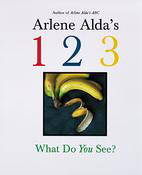
Arlene Alda&039;s 1 2 3
Arlene Alda’s 1 2 3: What do you see? is not your typical counting book–but it is typical of Arlene Alda’s artistic and imaginative writing and photography.

The text on each page is simple–just the numbers 1 through 10 with a particular number highlighted. But the photography is spectacular. Alda “finds” numbers in unexpected places–like the 3 found in the banana peel on the front cover. The book goes from 1 to 10 and back again for a total of two photos per number–from sources as diverse as a seashell, a flamingo, and the shadow of a bike.

Arlene Alda’s A B C: What do you see? takes the same tack, only with letters instead of numbers. Alda finds an A in a sawhorse, a B in a cut apple, a C in shrimp in a saute pan–and so on and so forth.

I marvel at Alda’s imaginative eye and have started to look for letters and numbers in my world too–Is that a T I see in that mailbox, centered on its post?

Alda continues to share her gift of creative sight in Here a Face, There a Face, where she finds faces in all sorts of organic and inorganic items. The text in this title is spare, but appropriate. “Looking up, Glancing down, Staring straight ahead. On a pot, in a pan, even on some bread.”

Did You Say Pears?

Did You Say Pears? takes on a slightly different flavour, exploring homonyms and homophones through words and photos. Alda poses a grand question throughout the book: “If [blank] is [blank] and [blank] is [blank], don’t you agree that pairs could be pears?” Some of the homonyms (words that have at least two different meanings) that Alda uses include: horns, pants, and glasses. Her homophones (words that sound alike but have different spellings and meanings) include blew/blue, flower/flour, and (of course) pairs/pears.

I am thoroughly enthralled with Alda’s writing and her photography. She is truly an artist–one who sees the world differently and invites her readers to see the world through her eyes. Check these books out next time you’re at your local library!